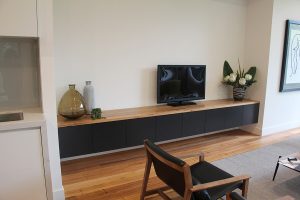
Entertainment unit measurements help Melbourne homeowners plan TV cabinetry around screen size, devices, power and practical storage before quoting.
Useful entertainment unit measurements go beyond the width of an empty wall. Before design begins, homeowners should record the television, devices, speakers, power locations, viewing arrangement and storage requirements so the brief reflects how the room will work.
What Should You Measure Before Requesting a Design?
Start with the wall width and height, then record anything that interrupts the usable area. Skirting boards, cornices, windows, doors, vents, switches and adjoining cabinetry can all affect the design. Note the floor finish, but do not treat homeowner measurements as final production dimensions. We still need to assess the site before cabinetry is made.
Bring the following information to the first discussion:
- TV dimensions: Record the exact width, height and depth, not only the advertised screen size.
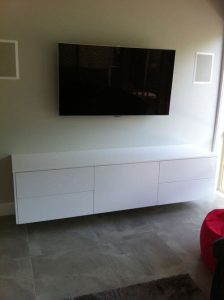
- Mounting details: Confirm whether the television will be wall-mounted, placed on cabinetry or retained on its existing stand.
- Sound equipment: Measure soundbars, speakers, amplifiers and any subwoofer that must sit within or beside the unit.
- Media devices: List gaming consoles, streaming boxes, routers and other equipment, including their cable and ventilation needs.
- Power and data points: Photograph and measure existing outlets rather than assuming they can be hidden behind a cabinet.
- Storage contents: Estimate the drawers, cupboards and open shelves needed for remotes, games, books and display pieces.
- Room clearances: Record nearby doors, walkways and furniture that could restrict cabinet depth or door movement.
Plan Around Viewing, Not an Empty Wall
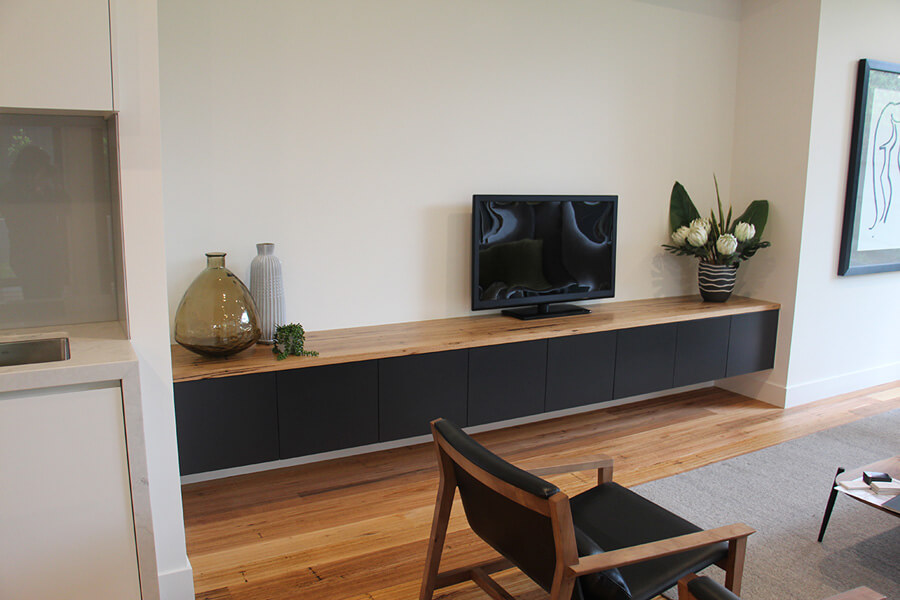
The largest unit that fits is not automatically the best design. The television must work with the seating position, viewing distance and sightline. CHOICE’s guide to choosing the right TV size explains that screen size and viewing distance should be considered together. Cabinet dimensions should therefore follow the viewing arrangement rather than force the television into an oversized joinery composition.
Tell us if the television may be upgraded. Designing only around the current screen can leave no practical allowance for a future model. The same applies to consoles, receivers and routers: shelves need enough usable depth, access and airflow for the actual equipment.
Why Power, Cables and Access Need Early Decisions
A clean elevation can hide the practical work behind it. Power leads, HDMI cables, data connections and antenna points need routes that remain accessible after installation. Devices may also need to be removed, reset or replaced without dismantling the surrounding cabinetry.
We design and build tailor-made entertainment units, but electrical or data work must be handled by appropriately qualified trades where required. Identifying these needs before final cabinetry documentation helps the homeowner coordinate the right trades and reduces the risk of outlets ending up behind fixed panels or inaccessible shelves.
Our existing article on custom entertainment units covers broader storage features, finishes and design options. This measurement-focused brief serves a different purpose: helping homeowners arrive at the design stage with accurate equipment information and realistic priorities.
Prepare for a More Productive Cabinetry Quote
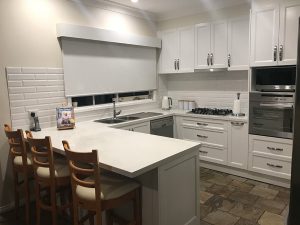
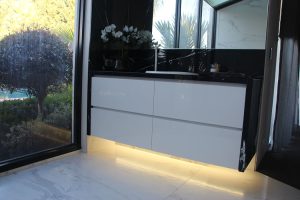
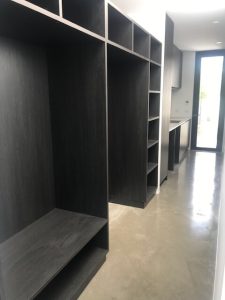
Before requesting a quote, collect wall photographs, approximate room dimensions, TV and device model numbers, storage requirements and examples of your preferred style. You can also review our cabinetry gallery to identify layouts or finishes worth discussing.
Antoniou Cabinets provides custom cabinetry, including entertainment units, across the Melbourne suburbs listed on our service page. Send us your initial measurements and project details so we can discuss the brief and prepare a quote based on the proposed work. Request an entertainment unit consultation to turn your equipment list and room constraints into a practical cabinetry plan.